
Why sealing concrete in Perth matters more than most places
Three things make Perth tougher on concrete than the eastern states: the UV index (Perth peaks at index 13+ in summer, brutal), the coastal salt air (within 5km of the coast everything corrodes faster), and the saltwater pool prevalence (Perth has more saltwater pools per capita than any Australian city). Add the 40°C+ day-to-night temperature swings in summer and you've got an environment that punishes any concrete that isn't properly sealed.
Unsealed concrete in Perth typically loses its surface integrity in 5–8 years. Sealed and maintained concrete lasts 25–35 years. The sealer schedule decides which side of that line you sit on.
“Every concrete repair we get called to in Perth, the first question is the sealer schedule. Nine times out of ten the answer is "the original contractor sealed it once and never came back". That single skipped re-seal cycle costs you 10 years of finish life.
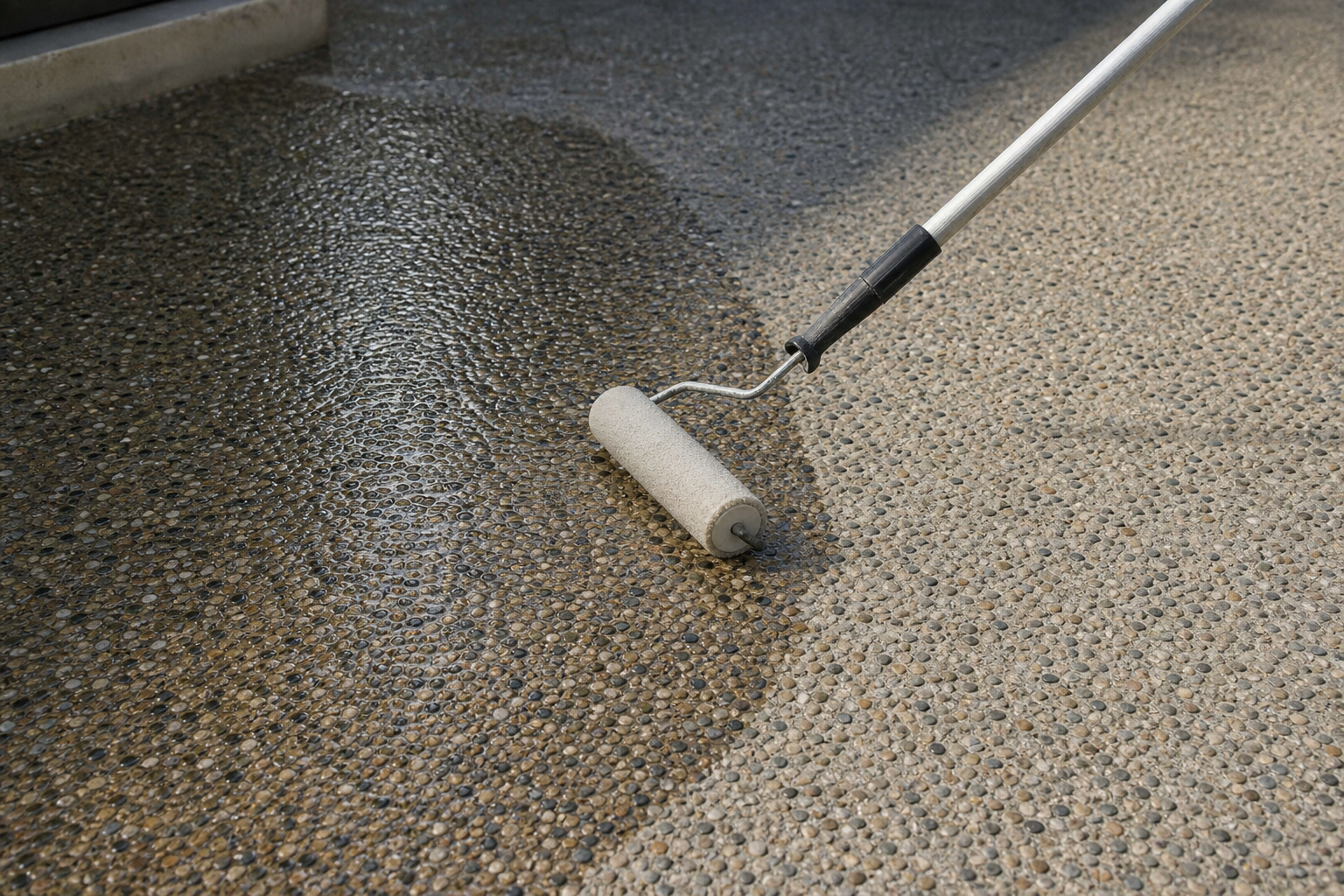
The 3 sealer types — penetrating, acrylic, polyurethane
Three families of sealer cover almost every Perth concrete application. Knowing which is which matters because they have completely different application schedules, lifespans and costs.
| Sealer type | Finish look | Lifespan (Perth) | Cost per m² | Best surface | Re-coat interval |
|---|---|---|---|---|---|
| Penetrating siloxane | Invisible (no sheen change) | 5–8 years | $8–$14 | All outdoor concrete (base layer) | 5–7 years |
| Acrylic topical | Low to medium sheen, colour enhancement | 3–5 years | $10–$18 | Decorative concrete, exposed aggregate | 3–5 years |
| Polyurethane (water-based) | Medium sheen, hard wearing | 8–12 years | $18–$25 | Indoor high-traffic floors | 8–10 years |
| Polyurethane (solvent) | High sheen, very hard | 10–15 years | $20–$30 | Industrial / commercial floors | 10–12 years |
The right Perth setup for most outdoor decorative concrete is penetrating siloxane + acrylic topical layered together. Indoor polished concrete usually doesn't need topical sealer — the polish itself is the protection.
Which sealer for which surface (driveway, alfresco, pool surround, indoor floor)
By application:
- Driveways — penetrating siloxane first coat (deep protection against salt, oil drips, water), acrylic topical second coat for visual enhancement of exposed aggregate. Re-coat acrylic every 4–5 years.
- Alfresco / outdoor entertaining — penetrating siloxane base, acrylic topical with subtle sheen, slip-resistant additive in the topical. Re-coat every 5–7 years.
- Pool surrounds (liquid limestone) — penetrating siloxane first (critical for salt protection), acrylic topical with anti-slip additive at year 3. Re-coat surround every 4–5 years.
- Indoor polished concrete — no separate sealer needed for mechanical polish — the polish acts as the seal. Optional hard-wax sealer for ultimate matte luxury look ($15/m² added).
- Indoor honed concrete — water-based polyurethane for high-traffic zones, penetrating siloxane for low-traffic areas. Cost $15–$22/m².
- Garage floors — water-based polyurethane handles vehicle traffic + oil spillage. Re-coat 8–10 years.
Cost of sealing in Perth (DIY vs pro)
DIY sealer: $4–$8/m² in materials. Penetrating siloxane $40–$60 per 5L (covers ~20m²). Acrylic topical $50–$80 per 5L (covers ~25m²). Add a $40 roller setup and 4 hours labour per 100m².
Professional sealer application: $10–$25/m² depending on surface and sealer combination. Includes surface prep (light wash, dry-down, drift cleanup), correct application technique, two-coat schedule, weather monitoring.
For a 100m² Perth driveway, DIY materials run $400–$800. Professional application $1,000–$2,500. The cost difference reflects experience + risk. DIY done wrong (wrong weather, wrong sealer, wrong technique) costs more than professional in lost finish life.
TIPSWhen DIY makes sense
- ✓You have experience with the productIf you've sealed concrete or timber surfaces before and know how to roll without streaks, DIY is reasonable for re-coats.
- ✓Small areas (under 30m²)Side paths, small courtyards. Limited downside if you have to re-do.
- ✓Penetrating sealer onlyPenetrating sealers are more forgiving than topicals — invisible finish means streaks don't show.
- ✓First-time seal of a brand-new pourThe slab is clean and even — easier than re-sealing a 5-year-old surface that needs prep work first.
How often to re-seal (and how to tell when)
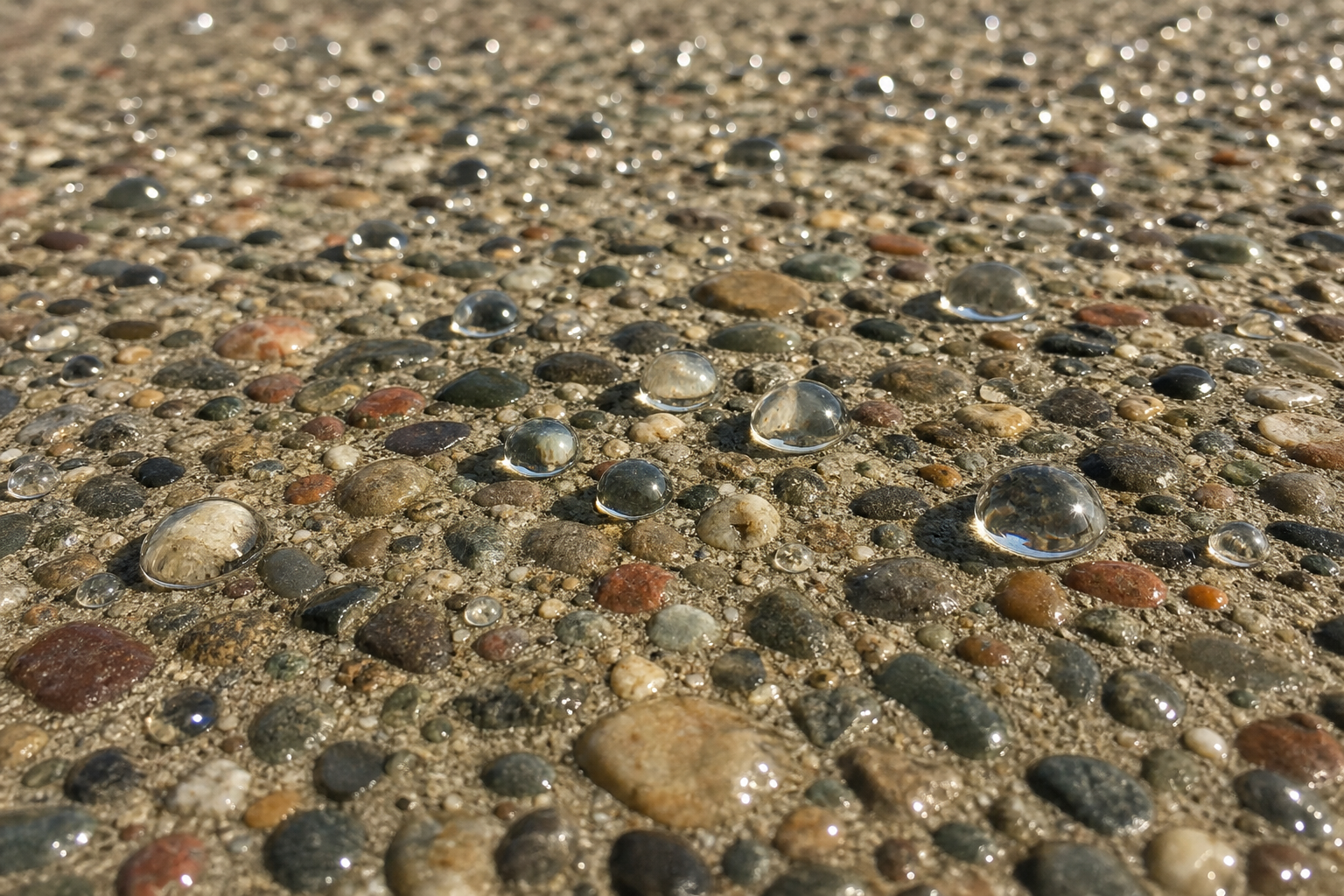
The water bead test is the universal Perth concrete seal indicator. Drop a tablespoon of water on a clean part of the surface. If it beads up (round droplet), the seal is working. If it spreads flat and starts soaking in, the seal has failed and you're overdue.
By surface, typical Perth re-seal intervals:
- Exposed aggregate driveway (coastal) — 3 years.
- Exposed aggregate driveway (inland) — 5 years.
- Liquid limestone pool surround (coastal) — 4 years.
- Liquid limestone pool surround (inland) — 5–6 years.
- Honed concrete alfresco — 5–7 years.
- Indoor polished concrete — no re-seal needed (re-polish at 7–10 years).
- Garage floor (polyurethane) — 8–10 years.
Coastal properties (within 1km of the coast) lose seal life faster — salt air accelerates the breakdown. Add 1–2 years to the interval for inland properties (east of West Coast Highway).
Application — when to seal and when NOT to
The sealer choice matters less than the application conditions. Right sealer, wrong day = wasted product.
DORight conditions
- ✓28+ days after pourConcrete needs full cure before sealing. Earlier and you trap moisture inside the slab, causing blistering.
- ✓Surface bone dryNo rain or hose-down within 48 hours of application.
- ✓Surface temperature 15–25°CSealer flashes off too fast above 30°C. Below 15°C and it doesn't cure properly.
- ✓Dry forecast for 48 hoursRain in the first 48 hours after application washes off the topical layer.
- ✓Clean surfaceSweep, light pressure wash 24 hours before, let dry, then seal. No leaf debris, no oil.
DON'TWrong conditions
- ✗Hot Perth midday in summerSurface temp easily hits 35°C+. Sealer flashes off and streaks visible.
- ✗Within 7 days of pourConcrete still curing. Trapped moisture causes blistering within months.
- ✗Onto a damp surfaceWater under sealer ruins the bond. Bubbling visible within weeks.
- ✗Just before predicted rainTopical sealer needs 48 hours to fully cure. Skip the application if rain's coming within that window.
- ✗After a salt rinseWait for the surface to fully dry and ideally hose-rinse before sealing to remove salt residue.
Common sealer mistakes
The mistakes we get called to fix:
- Over-application — too much sealer pooling in low spots, leaving a glossy sheen patchwork. Less is more for topical sealers.
- No surface prep — sealing over dirty or moss-affected concrete. The sealer locks the dirt in permanently.
- Wrong sealer type for surface — penetrating sealer on indoor floors (no protection from foot traffic). Acrylic topical on garage floors (peels off with oil exposure).
- Solvent-based sealers indoors — VOC release is terrible. Use water-based polyurethane indoors only.
- Re-sealing too late — once water no longer beads, the unsealed concrete has already started absorbing salt and stains. Plan ahead.
- Cheap sealer products — supermarket-brand sealers fail in 12 months in Perth UV. Trade-quality products from concrete-specific suppliers last 5+ years.
For our concrete maintenance work, see concrete tips or our exposed aggregate and driveway services pages. Drop us a line for a re-seal quote.
About Richard Marsh
Founder · CoastCrete · 20+ years on the tools
Richard founded CoastCrete in Perth after a decade of pouring driveways, alfrescos and pool surrounds across the metro. He writes the articles, answers the calls, and runs the crew personally on every job — so what you read here is the same advice he gives clients on-site every week.
Read more articles by Richard →Common questions
Can I seal my concrete myself?
Yes for penetrating sealers and re-coats of acrylic topicals. No for initial sealing of new pours or for indoor polyurethane floors — those need professional application to get right.
What happens if I never seal my concrete?
Outdoor concrete lasts 5–8 years before surface degradation becomes noticeable. The slab itself stays structurally sound for decades but the finish becomes pitted, stained, and rough. Salt damage on coastal properties accelerates this.
Will sealer change the colour of my concrete?
Penetrating siloxane is invisible. Acrylic topical adds a slight 'wet look' that intensifies the existing colour by 10–20%. Polyurethane can yellow over years (solvent-based worse, water-based less). Look at the manufacturer's photos before committing.
Can I seal stained concrete?
Sealing over stains locks the stain in permanently. Clean the stain first (degreaser for oil, oxygen bleach for organic stains, rust remover for rust), let the surface dry completely, then seal.
Is anti-slip sealer worth the extra cost?
For pool surrounds and steps, absolutely. The aluminium-oxide additive in slip-resistant sealers adds about $3/m² and changes slip rating from R10 to R11–R12 wet. Cheap insurance against accidents.
What's the lifespan of acrylic vs polyurethane?
In Perth outdoor conditions: acrylic 3–5 years, polyurethane 8–12 years water-based. Polyurethane lasts longer outdoors but costs more upfront. For indoor floors, polyurethane is the only option that handles foot traffic over years.