
What goes wrong with exposed aggregate in Perth — and how to diagnose
Exposed aggregate looks tough, but it's actually three things working together: the concrete slab itself, the embedded stones, and the sealer holding the surface together. When the surface looks bad, only one of those is usually the real problem. Diagnose properly before you spend money.
TIPSQuick visual diagnosis
- ✓Chalky-looking patches, water not beadingSealer failure. Easy fix — re-seal.
- ✓Small pebbles popping out underfootLoose stones, usually sealer-failure symptom. Re-seal usually fixes it; severe cases need stone re-bond.
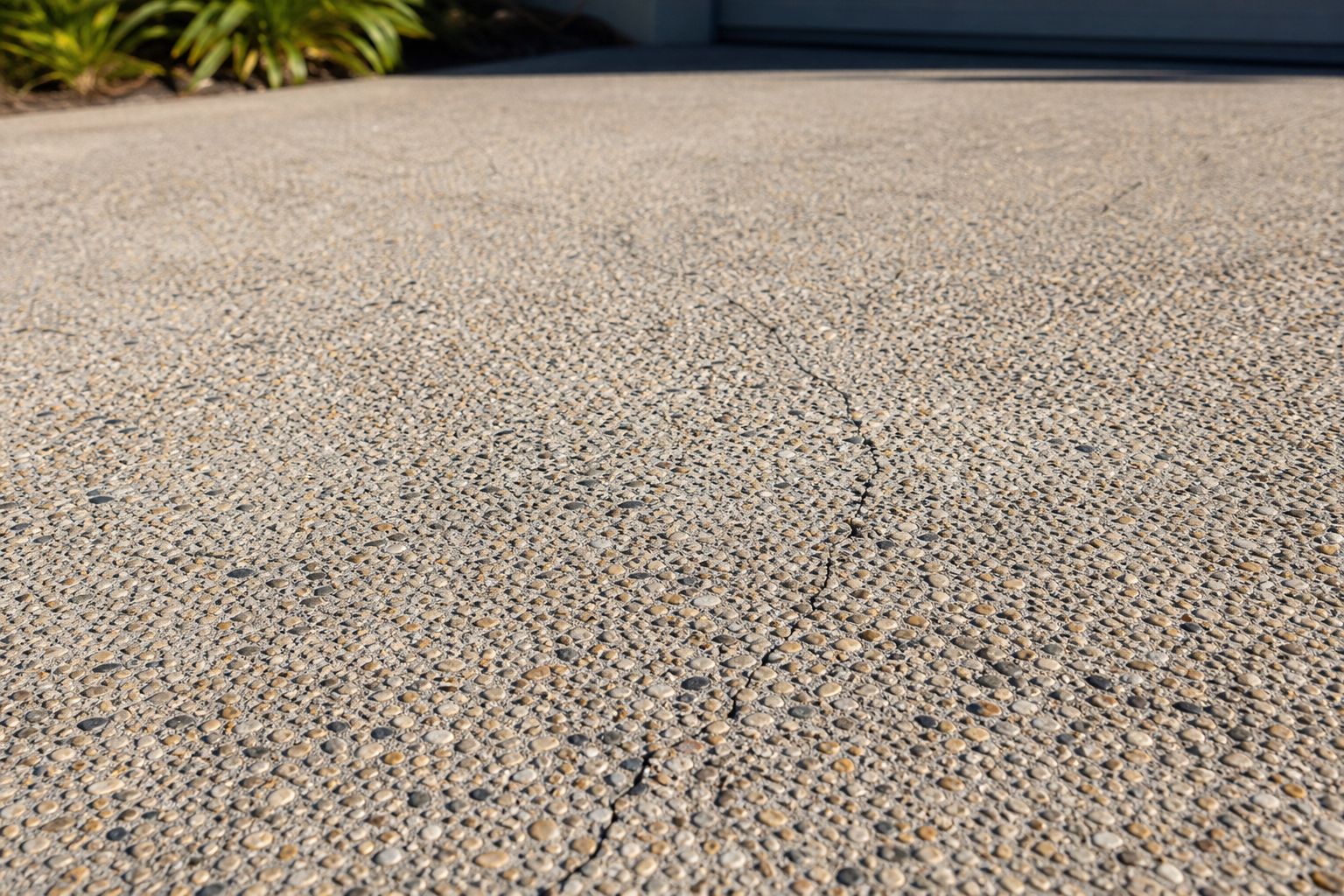
- ✓Hairline cracks (< 2mm wide)Cosmetic only. DIY filler fix.
- ✓Wider cracks (> 2mm)Structural movement. Investigate before patching.
- ✓Slab tilted, displaced sectionsSub-base failure. Hard fix, often requires partial re-pour.
- ✓Visible colour fadePigment UV damage or sealer breakdown. Tinted re-seal restores the look.
90% of what we see in Perth driveways is the first four categories — and the first four are cheap fixes done in a day. Sub-base failure is the expensive scenario, but it's rare unless the original installer cut corners.
When repair makes sense — and when it doesn't
The repair-or-replace decision usually comes down to three questions: how widespread is the damage, what's the underlying cause, and what's the realistic remaining lifespan of the existing slab?
- Under 20% of slab affected, surface-only damage → repair every time. The other 80% has decades of life left.
- 20–40% affected, surface and minor structural → spot-repair the structural, re-seal everything. Plan to revisit in 5 years.
- 40–60% affected, multiple sub-base issues → borderline. Often repair the slab is cheaper for now but you'll re-pour within 5 years anyway.
- 60%+ affected or sub-base failure → re-pour. Patching is throwing good money after bad.
“When we go out for a repair quote, we tell the homeowner straight if a repair will only last 3 years versus a re-pour that lasts 30. Sometimes the cheap fix isn't the right answer. When it's clearly the right call we'll say so. The on-site quote is free either way.
DIY repair: minor cracks and stone loss
The fixes most Perth homeowners can handle themselves with $40–$100 in materials and an afternoon.
Hairline cracks (under 2mm) — purely cosmetic. The slab is intact underneath. Process:
- Clean the crack with a wire brush and blow out dust.
- Apply a flexible concrete crack filler (Sika or similar) with a caulking gun.
- Smooth with a wet finger or wet putty knife.
- Allow 48 hours to cure before walking or driving on it.
- Re-seal the area to match surrounding colour.
Loose stones (under 10% of surface area) — usually fixed with re-seal alone. Process:
- Sweep loose stones away.
- Apply penetrating siloxane sealer with a roller (1 coat).
- After 24 hours, apply tinted acrylic topical sealer to lock the remaining stones in place.
- Allow 48 hours to cure before traffic.
Surface chips — concrete patching compound matched to the existing colour. Press into the chip, smooth, allow to cure, re-seal. Practice on an out-of-sight area first because matching colour exactly takes some experience.
Professional repair: structural cracking
When DIY isn't the right call:
- Cracks over 2mm wide — need investigation of underlying cause. Filling without addressing the root issue means re-cracking within a year.
- Cracks crossing the slab (not at joints) — points to sub-base movement or load-induced stress. Need a structural assessment.
- Tilted or displaced sections — sub-base failure underneath. Requires excavation, sub-base re-compaction, partial slab re-pour at minimum.
- Widespread stone loss (over 30% of slab) — points to systemic sealer failure or sub-spec original concrete mix. Need full assessment.
- Drainage issues causing slab degradation — fix the drainage before any slab repair, or you'll repair again next year.
Professional structural repair runs $200–$2,000 depending on scope. The investigation visit is usually free with a quote. We never charge for a site visit because half the time we recommend the homeowner do it themselves cheaper.
Cost of repair vs re-pour
| Damage type | Repair cost | Re-pour cost (75m² driveway) | Decision |
|---|---|---|---|
| Hairline cracks (multiple) | $200–$400 | $7,500–$11,000 | Repair |
| Loose stones (10–30%) | $500–$1,200 (re-seal) | $7,500–$11,000 | Repair |
| Surface fading + sealer fail | $800–$1,800 (re-seal full) | $7,500–$11,000 | Repair |
| Multiple major cracks (no sub-base) | $1,500–$3,500 | $7,500–$11,000 | Repair (but plan ahead) |
| Sub-base failure in one zone | $3,000–$5,000 (partial re-pour) | $7,500–$11,000 | Borderline — usually re-pour |
| Widespread structural failure | $5,000+ (limited benefit) | $7,500–$11,000 | Re-pour |
The economics are usually obvious. Cheap repairs that buy 10+ years of life are no-brainers. Expensive partial repairs that buy 5 years on a marginal slab are usually false economy — re-pour and start the 25-year clock from new.
Sealing and protection post-repair
Any concrete repair work needs to be followed by proper re-sealing. Skip this and you're back to where you started within 2 years.
DOPost-repair seal schedule
- ✓Wait 48 hours minimum after repairCrack filler and patching compound need full cure before sealing over.
- ✓Wash and dry the entire slabNot just the repaired zone. Even sealer coverage = uniform finish.
- ✓Apply penetrating siloxane firstDeep protection against salt and moisture. Standard sealer cost $8–$14/m².
- ✓Apply acrylic topical secondVisual enhancement and colour matching. Adds the wet-look sheen if you want it.
- ✓Match the existing finishIf the rest of the slab has matte finish, don't apply high-sheen topical to the repaired area only. Uniform across all.
For more on sealing strategy, see our concrete sealer guide and exposed aggregate service page.
What we charge for a typical Perth repair job
Honest pricing for the common Perth repair scenarios. Site-specific factors change every quote.
- Minor crack repair (5–10 hairline cracks, 75m² driveway) — $250–$400 including materials. Half-day job.
- Full re-seal (75m² driveway, no other repair) — $850–$1,200 including sealer + light pressure wash + full coat. 1 day.
- Stone re-bond + re-seal (loose stones across 30% of slab) — $1,400–$2,200. 1.5 days.
- Major crack repair + re-seal — $1,800–$3,500 depending on number of cracks and structural investigation needed. 1–2 days.
- Partial re-pour (one section, 10–20m²) — $2,500–$4,500. 3 days including curing time.
- Full driveway re-pour (75m²) — $7,500–$11,000 supplied and laid in exposed aggregate finish. 5–7 days.
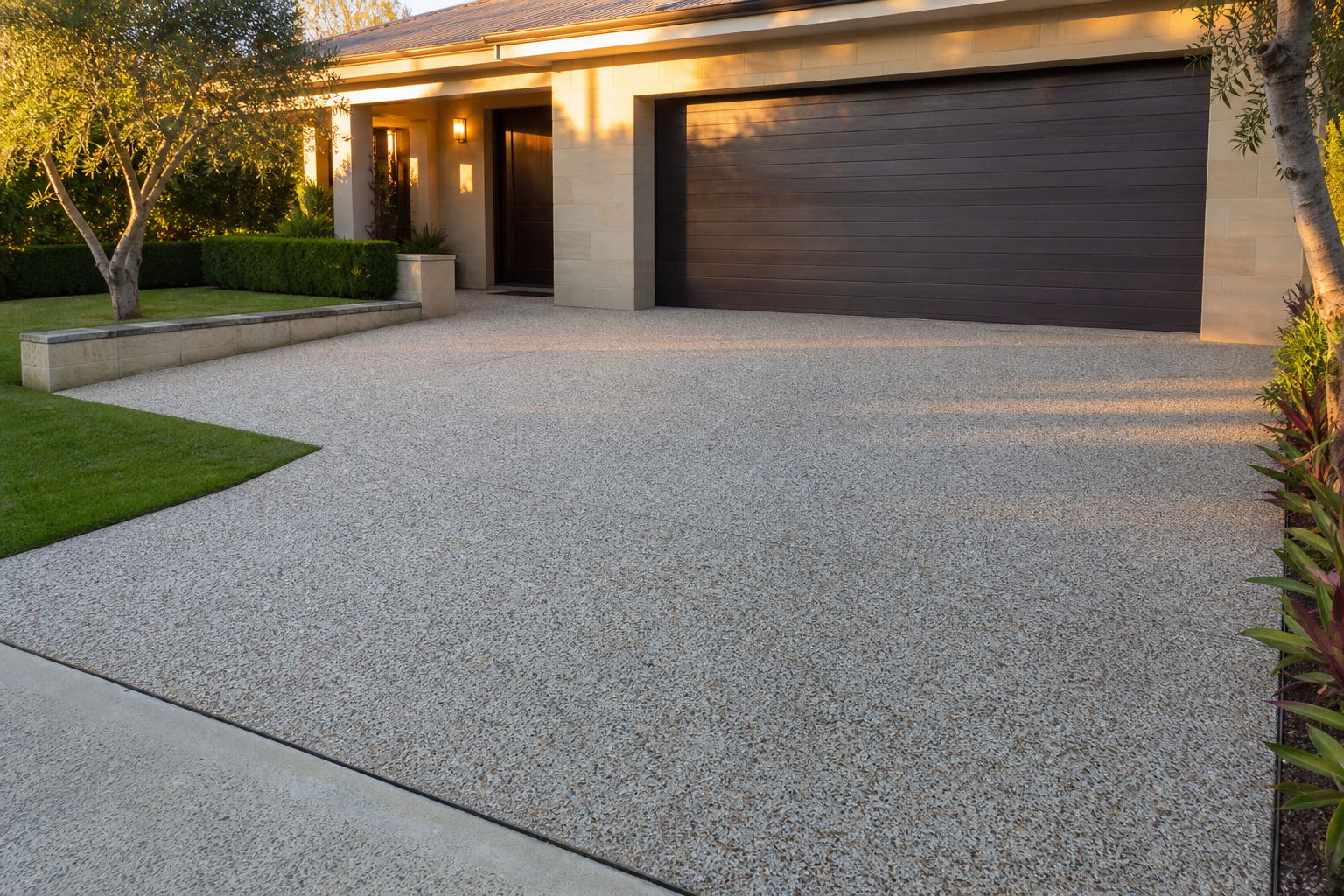
Get in touch for a free site visit. We give you the honest call on repair vs replace. Sometimes the answer's a job for us, sometimes it's a Sunday afternoon DIY — either way you get the straight story.
About Richard Marsh
Founder · CoastCrete · 20+ years on the tools
Richard founded CoastCrete in Perth after a decade of pouring driveways, alfrescos and pool surrounds across the metro. He writes the articles, answers the calls, and runs the crew personally on every job — so what you read here is the same advice he gives clients on-site every week.
Read more articles by Richard →Common questions
Can I patch concrete with a different brand or batch?
Yes for small repairs (under 1m²). Different batches cure to slightly different colours, but the difference is masked once the slab is re-sealed uniformly. For larger repairs, mix-matching becomes harder and re-pouring the affected section is often better.
How long does a patch repair last?
Good crack filler lasts 5–10 years if the underlying movement has been addressed. If the crack reopens within 12 months, the cause wasn't a one-off shrinkage crack — it's ongoing movement that needs structural investigation.
Why is my exposed aggregate fading?
Most fade is sealer breakdown, not stone fade. A re-seal restores the original look. If the stones themselves have lost colour, that's a UV-degradation issue on cheap pigment — only happens on lower-grade jobs. The fix is either accept the new colour or tinted re-seal to restore.
Can stones be replaced individually if they fall out?
Sometimes yes — small areas can have new aggregate pressed into a fresh cement bed and the surface re-exposed. The colour match is approximate, so it's best for low-visibility areas or as part of a wider re-seal that masks the patch.
What about a polished concrete overlay over a damaged exposed aggregate slab?
Possible — a 6–15mm polished topping can cover most exposed aggregate damage and gives you a totally different finish. Cost $90–$150/m². Worth considering if the underlying slab is structurally sound but the finish has aged badly.
Is it worth repairing a 25-year-old driveway?
Usually yes if the slab is structurally sound. The slab itself has another 25 years in it; only the surface finish has aged. A repair + re-seal at year 25 gives you another decade of acceptable look without the re-pour cost. Beyond year 35 the math shifts toward re-pour.