
 Exposed Aggregate Concrete
 Honed Concrete
 Polished Concrete
 Liquid Limestone
 Concrete Driveways
 Concrete Alfresco
 Seamless Pool Edging
 Concrete Overlay
 Concrete Table Tops
 Concrete Pump Hire
Seamless pool edging vs traditional coping: the main differences
Pool coping is the finishing edge around the top of a swimming pool. It covers the perimeter where the pool structure meets the surrounding area and provides a surface for sitting, stepping and holding onto when getting out.
Seamless edging is a type of pool coping. In this comparison, “traditional coping” means separate coping units installed around the pool.
| Feature | Seamless concrete edging | Traditional coping units |
|---|---|---|
| Construction | Installer pours and shapes the concrete on site | Installer lays separate stone, tile or precast concrete pieces |
| Appearance | Continuous finish that can flow into the surround | Defined border with visible joints between units |
| Design flexibility | Installer forms the edge to suit the pool layout | Installer chooses and cuts units to fit the perimeter |
| Edge profile | Depends on the formwork and specified design | Depends on the coping product and available profiles |
| Maintenance | Cleaning, joint checks and sealing where specified | Cleaning, joint checks and product-specific care |
| Repairs | Patches may differ in colour or texture | Installer may replace individual units if suitable matches remain available |
| Existing pools | Requires assessment of the pool edge and surrounding structure | Requires assessment of the existing coping and supporting base |
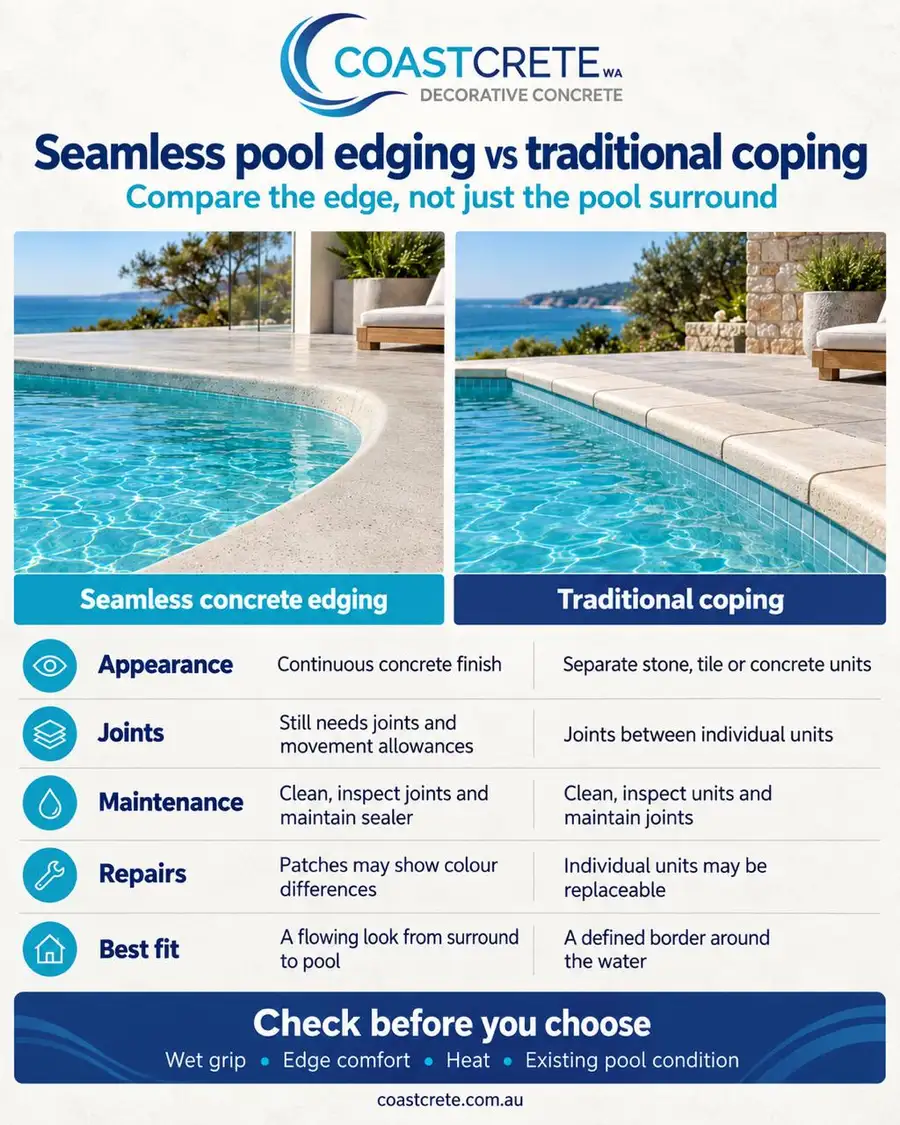
CoastCrete’s poured concrete pool-edge options provide a continuous finish without a separate row of bullnose capping or pavers.
Which option suits your pool’s design?
Start with the appearance you want from the house, alfresco and pool together.
Seamless concrete edging can suit a contemporary backyard where you want the paving or concrete surround to continue towards the water. Matching the edge and surround reduces the number of changes in colour and material.
Traditional coping gives you a separate border. You might choose pale stone around the water and a contrasting surface beyond it, or use matching coping units for a more consistent appearance.
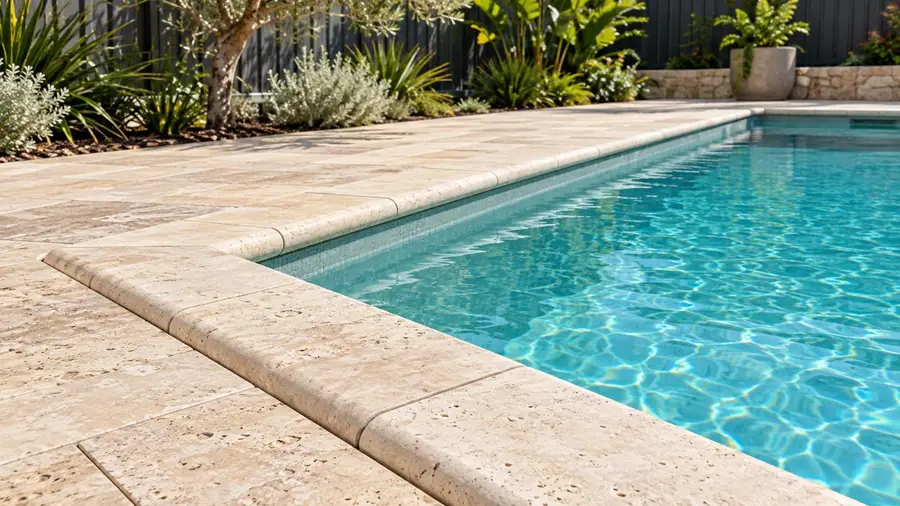
Neither option limits you to one architectural style. The colour, edge shape and surrounding materials matter as much as the construction method.
For example, a cream concrete surround with a rounded poured edge can suit a coastal home. A grey tiled coping border can suit a modern pool with straight sides.
For a curved pool, ask how the installer will form or cut the edge. With separate units, you should review the proposed joint layout and cut pieces before approving the design.
Compare comfort, grip and heat before appearance alone
You will touch the pool edge with wet hands and bare feet. Check how it feels, rather than judging it only from photographs.
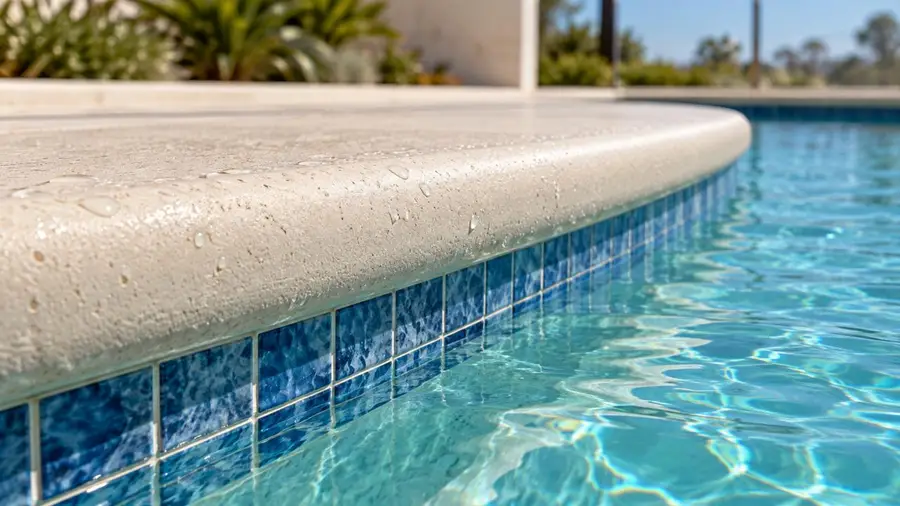
A rounded edge may feel more comfortable when sitting or climbing out. A square profile creates a different appearance, but the installer still needs to finish exposed corners with comfort in mind.
Ask to feel a sample of the proposed surface. A texture that suits a path may feel too rough where swimmers rest their arms.
Surface grip
Neither seamless edging nor traditional coping guarantees slip resistance. The material, surface treatment, sealer and wear all affect how it performs when wet.
Ask your installer for relevant slip-test information for the proposed finish and its intended use. A glossy display sample may look appealing but require a different finish beside the water.
If you are considering a ground concrete surface, explore CoastCrete’s honed finishes for outdoor entertaining areas and discuss the pool-edge requirements before choosing.
Heat underfoot
Colour and sun exposure affect surface temperature. Light finishes tend to absorb less solar heat than dark finishes, but you should also consider the material, shade and time of day.
Compare samples outdoors where possible. A surface that feels comfortable in a shaded showroom may feel different beside an unshaded Perth pool.
Does seamless pool edging mean there are no joints?
“Seamless” describes the continuous appearance. It does not mean the installer can omit joints or pour concrete around the pool without allowing for movement.
Concrete changes as it cures and responds to temperature. Installers use control joints to help manage where shrinkage cracks occur, along with separation or movement details where the design requires them. These details serve different purposes and need planning before the pour.
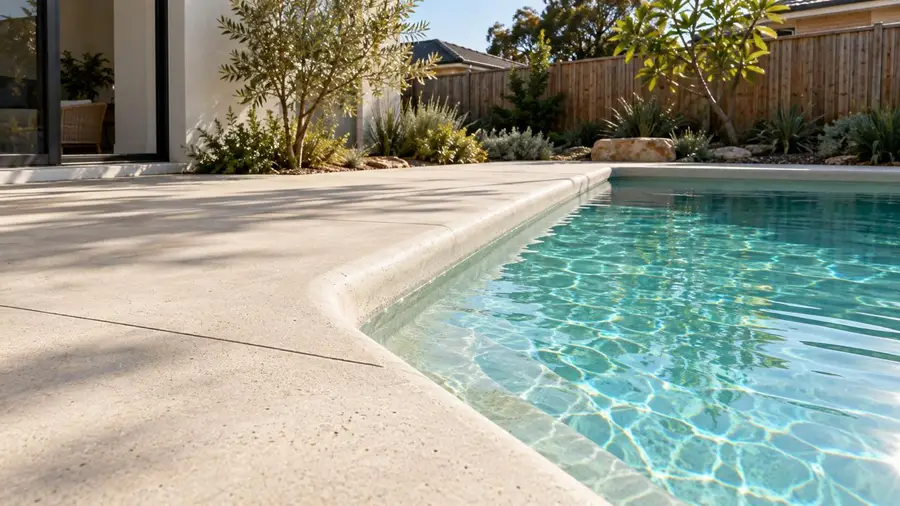
Ask your contractor to show you the proposed joint locations. You can then discuss how they line up with the pool corners, surrounding concrete and other features.
Traditional coping also needs appropriate joints and installation details. Separate pieces do not remove the need to account for movement between the pool and surrounding surfaces.
Avoid choosing either system on a promise that it cannot crack. Ask how the installer will manage movement and what the repair process would involve.
Which option is easier to maintain and repair?
With seamless edging, you have fewer joints between separate coping pieces to clean. You will still need to remove dirt, monitor the concrete and maintain any specified sealer.
Traditional coping has joints between units. Depending on the system, you may need to check grout, flexible joint material and the condition of individual pieces.
For both options:
- Use cleaning products suitable for the material and sealer.
- Address loose sections, damaged joints or sharp chips.
- Follow the installer’s guidance for pool chemical exposure and aftercare.
Our guide to concrete sealers and application timing explains the different sealer types. Your installer should confirm the product and maintenance schedule for your pool edge.
Repairs deserve attention before installation. A contractor may be able to replace a damaged coping unit without replacing the whole border. However, discontinued products or weathering can make an exact match difficult.
Concrete repairs can also leave visible differences in colour and texture. Ask whether the contractor would repair a small area or replace a larger section to achieve an acceptable result.
Can you change the edging around an existing pool?
An existing pool may suit either system, but the contractor needs to inspect it first.
The assessment should cover the current coping, pool shell, surrounding surface and finished levels. Your contractor also needs to check how removal work could affect the waterline tiles or other parts of the pool.
A renovation quote should explain:
- Which existing materials the contractor will remove.
- Whether the supporting structure needs repairs.
- How the new edge will meet the surrounding surface.
- How the installer will manage drainage and movement.
- How long you will need to keep the pool area out of use.
CoastCrete assesses existing pools for seamless edging installations. Suitability depends on the site and the work needed to prepare the edge.
If you are also considering covering the surrounding slab, read our explanation of when resurfacing existing concrete is suitable. That is a separate decision from replacing the coping.
Compare quotes for the same scope of work
A lower quote may cover fewer tasks. Compare the removal, preparation, edge profile, finish and joint details before comparing the final price.
Ask each contractor to specify the pool perimeter, access requirements and work included. For separate coping units, check whether the quote includes corner pieces, curved cuts and joint finishing. For poured edging, check the formwork, concrete finish and sealing requirements.
Keep the coping decision separate from your choice of material for the wider deck. Our comparison of limestone surfaces around pools covers that broader choice.
Choosing the right edge for your Perth pool
Choose seamless concrete edging if you want a continuous finish and your pool suits the installation. Choose traditional coping if you prefer a defined border or want the option of replacing individual pieces.
Before committing, compare physical samples, review the joint layout and ask how the contractor will handle future repairs. Those details will affect your experience long after the installation.
CoastCrete supplies and installs decorative concrete across Perth, Mandurah and Gingin. To discuss your pool edge and surrounding concrete, request an on-site pool renovation quote.
About Richard Marsh
Founder · CoastCrete · 20+ years on the tools
Richard founded CoastCrete in Perth after a decade of pouring driveways, alfrescos and pool surrounds across the metro. He writes the articles, answers the calls, and runs the crew personally on every job, so what you read here is the same advice he gives clients on-site every week.
Read more articles by Richard →